
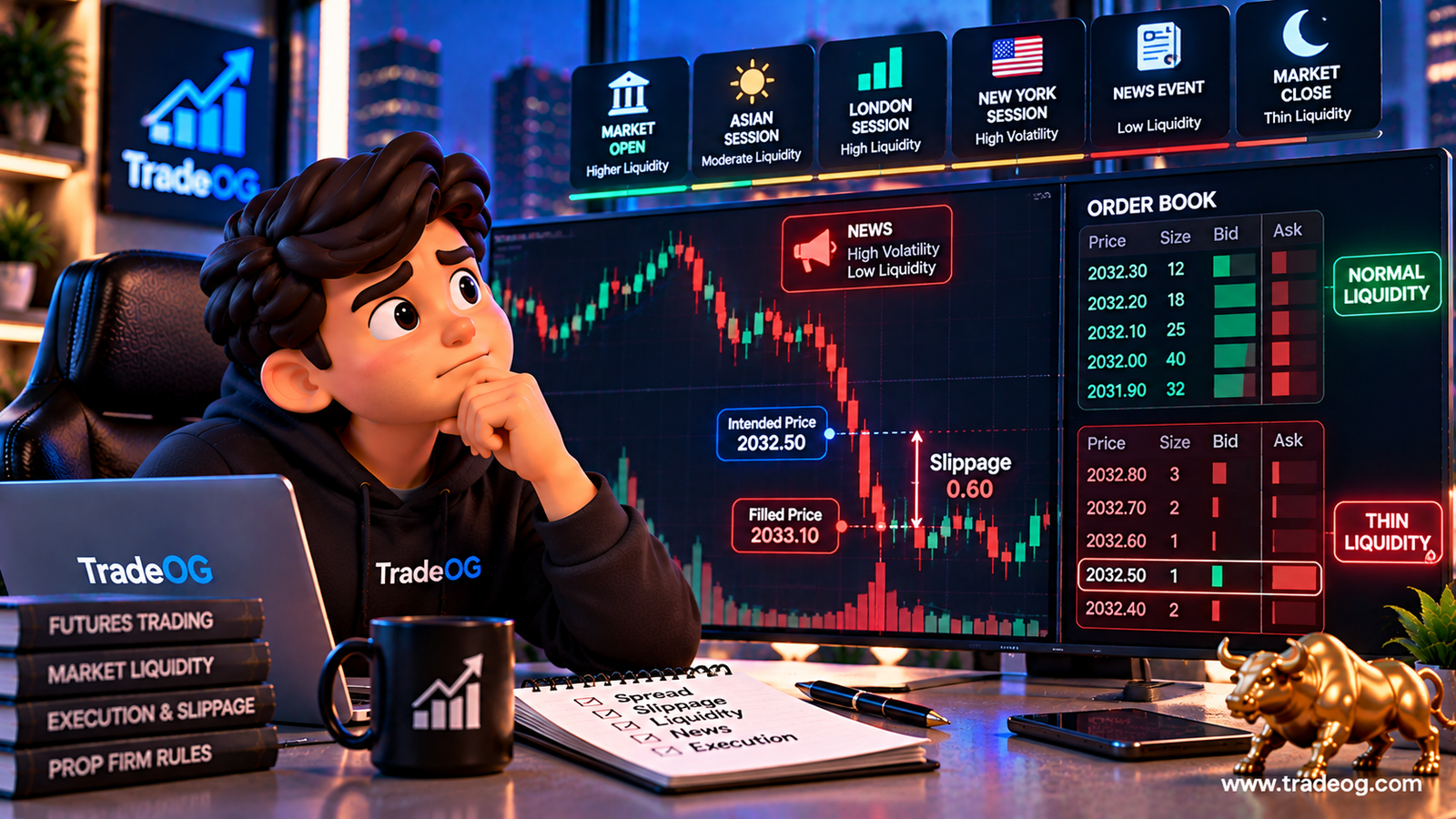
Prop firm liquidity rules can become important when a trader expects an order to fill at one price but receives a materially different execution. The difference is often explained by normal market mechanics: available liquidity, order-book depth, volatility, spreads, gaps and the size or timing of the order.
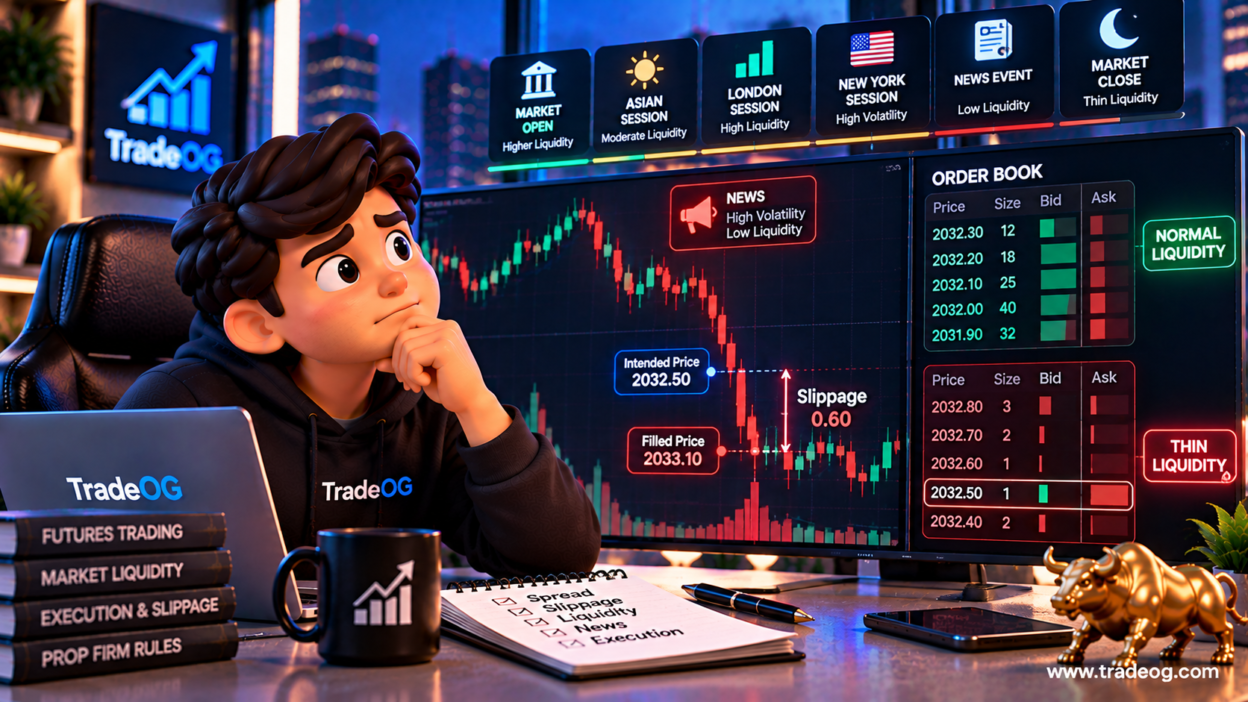
Liquidity is not a fixed number throughout the trading day. It can change around market opens and closes, economic releases, rollovers, overnight sessions and unexpected events. In thinner conditions, the price available for the next part of an order may be farther away from the intended price.
What Is Liquidity in Trading?
Liquidity describes how much buying and selling interest is available to transact without causing a large price change. A market with deeper liquidity generally has more available volume around the current price. A thin market has less available volume, so larger orders or sudden market moves can have a greater effect on execution.
For prop traders, liquidity matters because evaluation and funded-account risk limits can be relatively close to the account’s available loss threshold. A few ticks or pips of unexpected execution difference can therefore have a larger impact on risk than the trader anticipated.
Why Does Low Liquidity Cause Poor Execution?
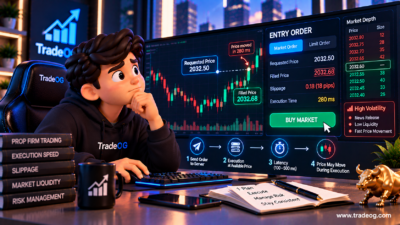
When a market order is submitted, it is not necessarily filled at the last displayed price. The order must interact with available quotes. If there is insufficient volume at the desired level, the remaining quantity can be filled at subsequent available prices.
Topstep explains that slippage occurs when there is not enough market depth to fill an order at the exact intended price. It identifies volatility, liquidity and market gaps as major drivers of slippage. Topstep — Order Types, Fills, and Slippage
FundedNext similarly states that orders are filled according to prevailing market conditions, the order book and the volume available at the requested price, with greater differences possible in volatile or illiquid conditions. FundedNext — Slippage Explained
Liquidity vs Slippage
Liquidity and slippage are related but they are not the same thing.
- Liquidity: the availability of buyers and sellers at different prices.
- Slippage: the difference between the expected/requested price and the actual execution price.
- Spread: the difference between the bid and ask.
- Market depth: the amount of available buying and selling interest at different price levels.
Thin liquidity can increase the probability or size of slippage, but slippage can also occur because of execution latency, fast price movement or a market gap.
When Are Prop Firm Traders Most Likely to See Poor Execution?
1. High-Impact Economic News
CPI, employment reports, central-bank decisions and other major releases can cause prices to move very quickly. During those moments, available liquidity can change rapidly and spreads can widen.
Topstep states that slippage is common during economic releases and recommends caution because rapid price movement and reduced liquidity can make fills worse than expected. Topstep — Economic Releases
2. Market Open
Market opens can produce a rapid increase in order flow. This does not automatically mean liquidity is poor, but price movement can be fast enough that the displayed price changes before an order reaches execution.
3. Market Close
Liquidity can change as participants reduce positions or markets approach a session boundary. Traders should understand the specific trading hours of their product rather than assuming that every market behaves identically.
4. Overnight and Off-Hours Trading
Some instruments have lower participation outside their most active sessions. FTMO notes that low liquidity can occur around market rollover and that thin liquidity can contribute to slippage and wider spreads. urlFTMO — Slippage & Order Executionhttps://ftmo.com/en/blog/slippage-order-execution/
5. Market Gaps
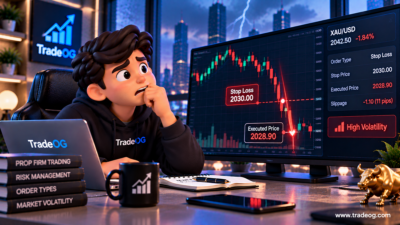
A gap occurs when the next available market price is significantly different from the previous traded level. A stop order cannot guarantee a fill at the exact stop price if the market moves through that level without sufficient executable prices.
6. Unexpected Headlines
Geopolitical developments, emergency announcements and unexpected company or economic news can change liquidity and volatility very quickly. FTMO has highlighted conditions such as wider spreads, price gaps, slippage and reduced liquidity during unstable markets. urlFTMO — Trading Updatehttps://ftmo.com/en/blog/trading-updates/trading-update-24-mar-2026/
How Order Size Can Affect Execution
Order size matters because a larger order may consume more of the available liquidity near the current price. If the first price level does not contain enough volume, additional portions of the order may execute at different prices.
This is particularly relevant when a trader moves from Micro contracts to Mini contracts or substantially increases lot size. A strategy that appears to work with a small position can experience different execution characteristics when position size becomes larger.
FundedNext specifically notes that high-lot trades can cause slippage when the requested price does not have sufficient volume available. urlFundedNext — Slippage Explainedhttps://help.fundednext.com/en/articles/10469516-what-is-slippage-understanding-slippage-in-trading
Spread Widening Can Look Like Bad Execution
Not every unexpected stop-out is caused by a bad fill or platform problem. The bid and ask can move apart when liquidity becomes thin or volatility increases.
For a long position, a stop may be triggered by the bid price while the trader is watching a chart that visually emphasizes another price. If the spread expands, the position can reach the stop threshold sooner than expected.
FTMO explains that spreads can widen when liquidity is scarce or volatility increases and that this can affect stop-loss execution. urlFTMO — Slippage & Order Executionhttps://ftmo.com/en/blog/slippage-order-execution/
Market Orders vs Limit Orders
Order type changes the execution trade-off.
| Order Type | Main Advantage | Main Trade-Off |
|---|---|---|
| Market order | Higher probability of immediate execution | Execution price is not guaranteed |
| Limit order | Controls the worst acceptable entry price | May not fill at all |
| Stop order | Can activate when price reaches a trigger | Fast movement can create slippage after activation |
| Stop-limit order | Adds price control after the trigger | Can remain unfilled during a fast move |
Topstep notes that limit orders can provide more control over execution price, while the trade-off is that the order may not fill. Topstep — Order Types, Fills, and Slippage
Can Slippage Cause a Prop Firm Rule Breach?
Yes, it can contribute to a breach when the account’s risk threshold is close and the execution moves farther than expected.
For example, suppose a trader plans to risk $150 on a trade and places a stop at that level. If a fast market produces additional slippage, the realized loss may be larger than the planned stop-loss risk. If the account is already close to a daily or maximum loss threshold, that difference can matter.
Topstep states that slippage can push a fill beyond a stop level and that losses can exceed account limits in fast or volatile markets. Topstep — Order Types, Fills, and Slippage
Why Prop Firm Risk Buffers Matter
A trader should not calculate risk only from the ideal entry and ideal stop. Execution uncertainty should be considered when the account is close to its loss threshold.
Consider a hypothetical account with $1,000 of remaining drawdown. A planned trade risks $150, leaving $850 of room. If unusually poor execution adds another $50, the account has experienced a $200 loss instead of the expected $150.
The lesson is not that slippage can be predicted precisely. It is that position size should leave enough room for normal execution uncertainty, particularly around known high-risk periods.
How to Check Whether a Trade Had Slippage
- Record the intended entry or stop price.
- Record the actual fill price.
- Calculate the price difference.
- Check the market conditions at the exact execution time.
- Review spread and available market data where your platform provides it.
- Check whether the market was near an open, close, rollover or economic release.
- Compare the event with the prop firm’s current execution policy.
Topstep recommends comparing the intended fill with the actual fill and checking market data around the execution time when investigating slippage. Topstep — Order Types, Fills, and Slippage
Does Every Prop Firm Handle Liquidity the Same Way?
No. Execution models, platforms, liquidity sources, simulated-market methodology, trading restrictions and account rules differ between firms.
FTMO says its simulated trading environment uses market pricing and can include execution delays and positive or negative slippage. urlFTMO — Technical Infrastructurehttps://ftmo.com/en/faq/how-does-the-ftmo-technical-infrastructure-work/
For FTMO Futures, the company says trades use real exchange quotes and data in a simulated environment, while execution delays and slippage can still occur. urlFTMO Futures — Technical Infrastructurehttps://ftmo.com/en/futures/faq/ftr-how-does-the-ftmo-technical-infrastructure-work/
FundedNext states that its orders execute in a simulated real-market environment using quotes from its liquidity providers and that execution follows market conditions, the order book and available volume. urlFundedNext — Real Market Executionhttps://help.fundednext.com/en/articles/8662544-is-trading-in-the-fundednext-challenge-and-fundednext-account-conducted-according-to-the-real-market
Liquidity Rules Traders Should Read
When evaluating a prop firm, search its official rules for terms related to:
- slippage
- market execution
- liquidity
- news trading
- rollover
- market gaps
- spread widening
- maximum order size
- stop-loss execution
- trade restrictions during volatile conditions
- account liquidation
- execution disputes and adjustments
Do not assume that a rule from one firm automatically applies to another. Even when two firms use similar trading platforms, their account policies can differ.
How Traders Can Reduce Poor-Execution Risk
- Reduce position size: Smaller positions reduce the dollar impact of execution differences.
- Know the economic calendar: Major releases can produce rapid price movement.
- Avoid unnecessary entries in thin markets: Rollover and off-hours conditions may have less depth.
- Use appropriate order types: Limit orders can improve price control but may not fill.
- Keep a drawdown buffer: Do not operate immediately next to the account’s loss threshold.
- Review actual fills: Use trade history rather than assuming the chart price was the execution price.
- Read the firm’s current rules: Policies can change and may differ by account model.
Example: Why a Stop Can Fill Worse Than Expected
Imagine a futures trader buys at 5,000 and places a protective stop at 4,995. Under normal conditions, the trader may expect approximately 5 points of risk.
Now suppose an unexpected headline causes the market to fall rapidly and the available liquidity around 4,995 becomes insufficient. The stop activates, but the next executable prices may be lower. The actual fill could therefore be below 4,995.
The resulting loss is larger than the planned stop distance. This does not automatically prove a platform malfunction; it can be a normal consequence of market execution in a fast or thin market.
Liquidity vs Volatility: They Are Not Identical
High volatility and low liquidity often appear together, but they describe different market characteristics. A market can be volatile while still having substantial participation, and a market can have thin liquidity without a dramatic price move at that moment.
Topstep’s current guidance distinguishes liquidity-related execution problems from other market conditions and notes that economic releases can combine rapid movement with reduced liquidity. Topstep — Order Types, Fills, and Slippage
Special Risk in Futures: Sudden Liquidity Vacuums
Futures traders should also understand that exchanges have mechanisms designed to respond to unusually fast price movement. CME’s Velocity Logic, for example, can temporarily pause trading when price moves too far and too quickly and the order book cannot replenish sufficient liquidity. Topstep explains that this mechanism is designed around market structure and liquidity rather than simply high volatility. Topstep — CME Velocity Logic
Events like this reinforce why traders should not assume that every market condition will provide continuous execution at the price visible on a chart.
Final Takeaway
Prop firm liquidity rules matter because execution happens against available market conditions, not against the price a trader wishes to receive. Thin liquidity, rapid volatility, market gaps, wider spreads, news events and large order sizes can all contribute to worse-than-expected execution.
The practical response is to understand the firm’s execution model, monitor market conditions, use position sizes appropriate for the remaining drawdown, and leave enough room for execution uncertainty. A stop-loss is a risk-management tool, but in a fast market it should not automatically be treated as a guaranteed fill price.
Sources: FTMO, FTMO Futures, FundedNext and Topstep documentation. Rules and execution conditions can change, so traders should verify the current policy for their specific account before trading.