

Why Traders Increase Position Size After a Winning Trade
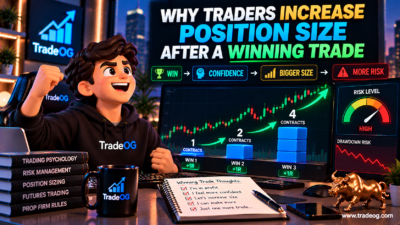
Winning trades can increase confidence and tempt traders to increase position size, which can also increase risk. A winning trade feels like…
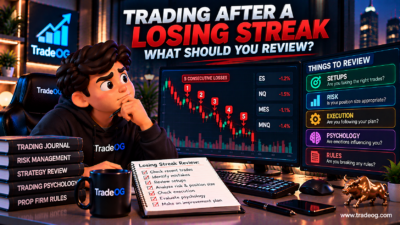
Trading After a Losing Streak: What Should You Review?
After a losing streak, reviewing setups, risk, execution, psychology and rule adherence can help identify what actually changed. A losing…

FOMO Trading in Futures: Why Traders Chase Entries
FOMO can push futures traders into late entries after a market move, changing planned risk and trade quality. FOMO trading in futures usually…
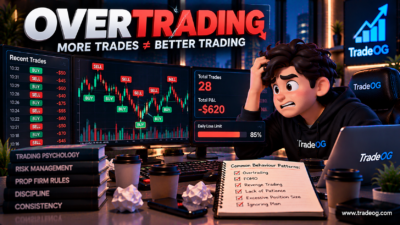
Overtrading in Prop Firm Challenges: Common Behaviour Patterns
Overtrading can turn normal market opportunities into excessive entries, higher risk and avoidable drawdown pressure. Overtrading is one of…
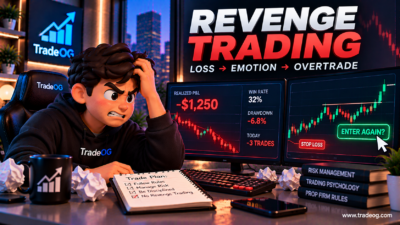
Revenge Trading After a Prop Firm Loss: Why It Happens
Revenge trading often begins when a normal trading loss turns into an emotional mission to recover money immediately. A losing trade is a…
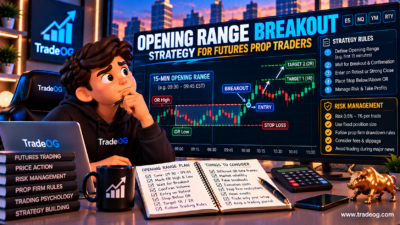
Opening Range Breakout Strategy for Futures Prop Traders
Learn how the Opening Range Breakout strategy works for futures prop traders, including 15-minute ORB rules, breakout confirmation, stops,…
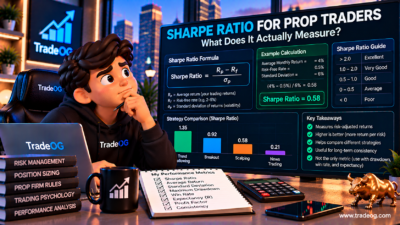
Sharpe Ratio for Prop Traders: What Does It Actually Measure?
Learn what the Sharpe ratio actually measures for prop traders, how to calculate it, how it differs from drawdown and R-multiple, and why it…
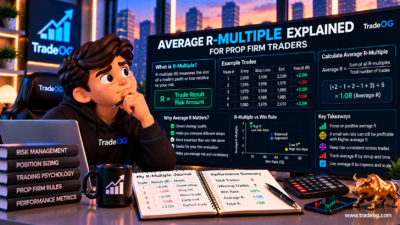
Average R-Multiple Explained for Prop Firm Traders
Learn what average R-multiple means for prop traders, how to calculate R per trade, compare setups, measure expectancy, manage drawdown and…
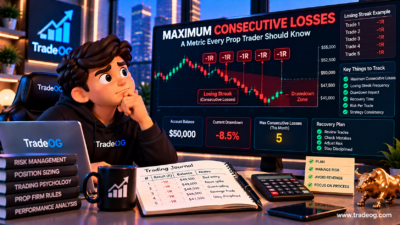
Maximum Consecutive Losses: A Metric Every Prop Trader Should Know
Learn how to calculate maximum consecutive losses, measure losing-streak severity, stress-test drawdown, size positions and manage prop firm…
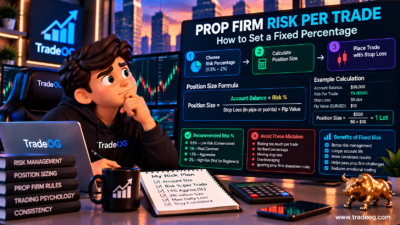
Prop Firm Risk Per Trade: How to Set a Fixed Percentage
Learn how to set fixed percentage risk per trade in prop trading, calculate position size, manage drawdown, handle losing streaks and build a…