
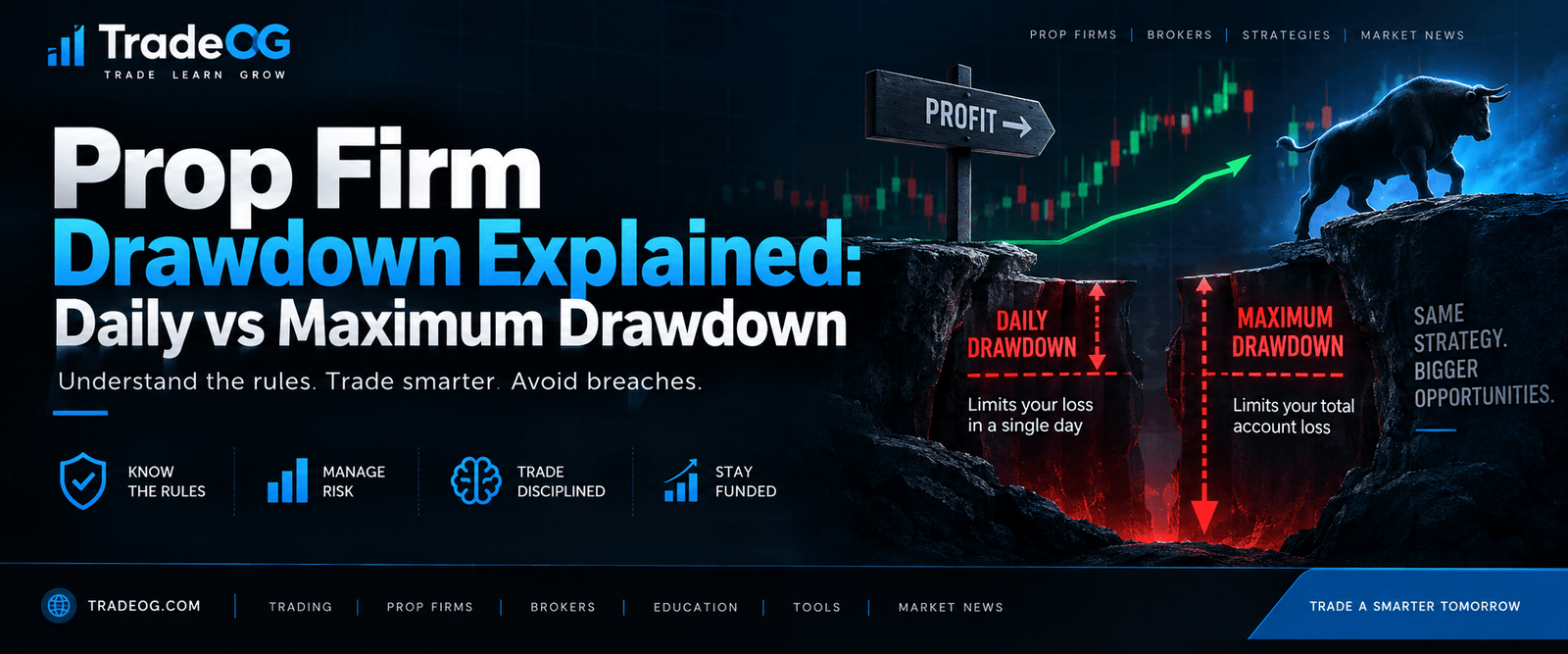

𝗣𝗿𝗼𝗽 𝗙𝗶𝗿𝗺 𝗗𝗿𝗮𝘄𝗱𝗼𝘄𝗻 𝗘𝘅𝗽𝗹𝗮𝗶𝗻𝗲𝗱: 𝗗𝗮𝗶𝗹𝘆 𝘃𝘀 𝗠𝗮𝘅𝗶𝗺𝘂𝗺 𝗗𝗿𝗮𝘄𝗱𝗼𝘄𝗻
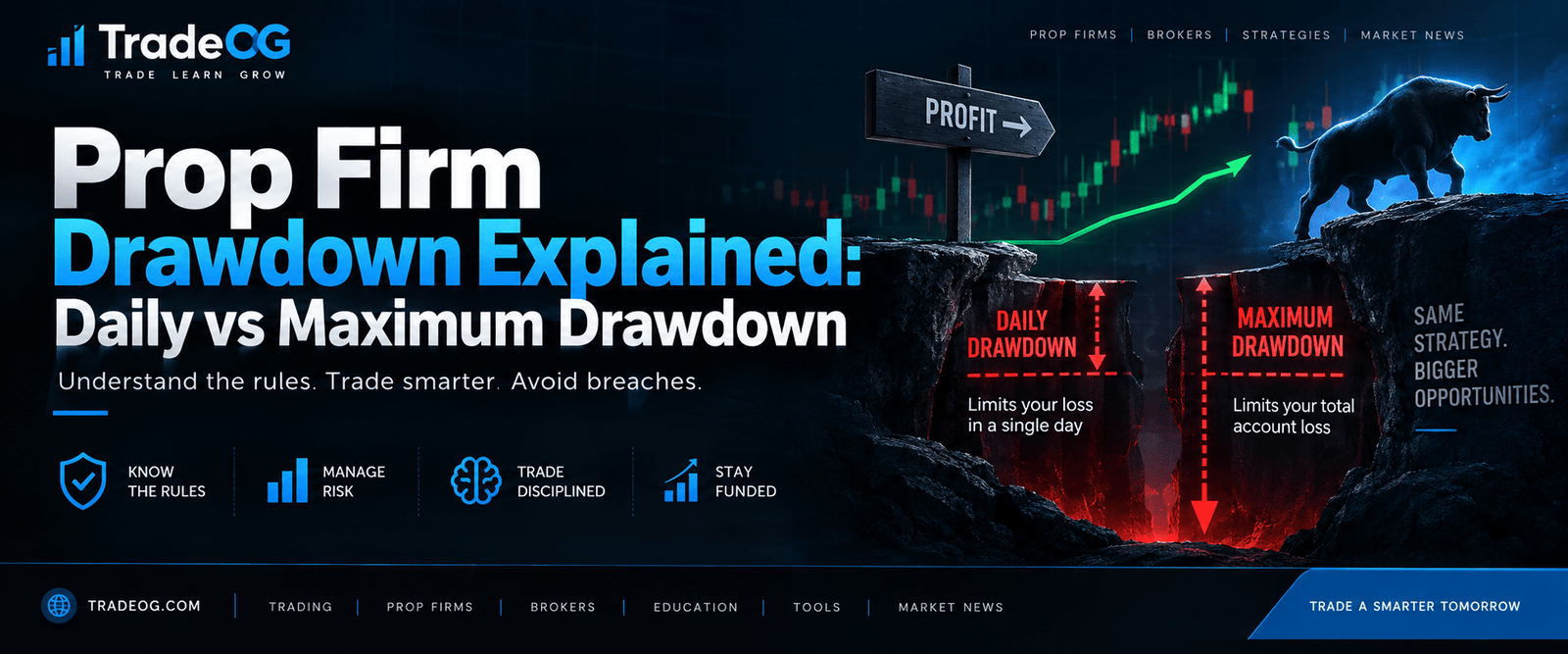 𝗣𝗿𝗼𝗽 𝗳𝗶𝗿𝗺 𝗱𝗿𝗮𝘄𝗱𝗼𝘄𝗻 is one of the most important rules every funded trader needs to understand. A trader can have a profitable strategy and still lose a prop firm account by violating its drawdown limits.
The two most common types are 𝗗𝗮𝗶𝗹𝘆 𝗗𝗿𝗮𝘄𝗱𝗼𝘄𝗻 and 𝗠𝗮𝘅𝗶𝗺𝘂𝗺 𝗗𝗿𝗮𝘄𝗱𝗼𝘄𝗻. Although both protect a prop firm’s capital, they work differently and can have very different consequences for traders.
In this guide, we explain what daily drawdown and maximum drawdown mean, how they are calculated, and how traders can avoid breaching them.
𝗞𝗲𝘆 𝗧𝗮𝗸𝗲𝗮𝘄𝗮𝘆: Daily drawdown limits how much you can lose within a single trading day, while maximum drawdown limits how much your account can fall overall.
𝗪𝗵𝗮𝘁 𝗜𝘀 𝗗𝗿𝗮𝘄𝗱𝗼𝘄𝗻 𝗶𝗻 𝗮 𝗣𝗿𝗼𝗽 𝗙𝗶𝗿𝗺?
Drawdown is the decline in your trading account from a specified reference point, such as your starting balance or the highest account equity.
For example, if you start a prop firm challenge with $𝟭𝟬𝟬,𝟬𝟬𝟬 and your account falls to $𝟵𝟲,𝟬𝟬𝟬, your drawdown is:
$𝟭𝟬𝟬,𝟬𝟬𝟬 − $𝟵𝟲,𝟬𝟬𝟬 = $𝟰,𝟬𝟬𝟬
That represents a 𝟰% 𝗱𝗿𝗮𝘄𝗱𝗼𝘄𝗻.
Prop firms use drawdown rules to control risk and prevent traders from taking excessive losses.
However, the exact calculation can vary between firms. Some use the starting balance, while others use the highest balance or equity reached by the account.
𝗪𝗵𝗮𝘁 𝗜𝘀 𝗗𝗮𝗶𝗹𝘆 𝗗𝗿𝗮𝘄𝗱𝗼𝘄𝗻?
𝗗𝗮𝗶𝗹𝘆 𝗱𝗿𝗮𝘄𝗱𝗼𝘄𝗻 is the maximum amount you are allowed to lose during a particular trading day.
For example, suppose a prop firm gives you a 𝟱% 𝗱𝗮𝗶𝗹𝘆 𝗱𝗿𝗮𝘄𝗱𝗼𝘄𝗻 𝗹𝗶𝗺𝗶𝘁 on a $100,000 account.
Your daily loss limit would be:
$𝟭𝟬𝟬,𝟬𝟬𝟬 × 𝟱% = $𝟱,𝟬𝟬𝟬
If your account reaches the firm’s daily loss threshold, you may violate the account even if your overall account is still above the maximum drawdown limit.
𝗘𝘅𝗮𝗺𝗽𝗹𝗲
Imagine your account starts the day with:
𝗔𝗰𝗰𝗼𝘂𝗻𝘁 𝗗𝗲𝘁𝗮𝗶𝗹𝘀 𝗩𝗮𝗹𝘂𝗲
𝗕𝗮𝗹𝗮𝗻𝗰𝗲 $100,000
𝗗𝗮𝗶𝗹𝘆 𝗗𝗿𝗮𝘄𝗱𝗼𝘄𝗻 𝗟𝗶𝗺𝗶𝘁 5%
𝗗𝗮𝗶𝗹𝘆 𝗟𝗼𝘀𝘀 𝗟𝗶𝗺𝗶𝘁 $5,000
You take three trades:
• Trade 1: -$𝟭,𝟱𝟬𝟬
• Trade 2: -$𝟮,𝟬𝟬𝟬
• Trade 3: -$𝟭,𝟲𝟬𝟬
Total loss:
-$𝟱,𝟭𝟬𝟬
You have exceeded the $5,000 daily drawdown allowance.
Depending on the firm’s rules, this could result in an immediate account breach.
𝗪𝗵𝗮𝘁 𝗜𝘀 𝗠𝗮𝘅𝗶𝗺𝘂𝗺 𝗗𝗿𝗮𝘄𝗱𝗼𝘄𝗻?
𝗠𝗮𝘅𝗶𝗺𝘂𝗺 𝗱𝗿𝗮𝘄𝗱𝗼𝘄𝗻, sometimes called 𝗼𝘃𝗲𝗿𝗮𝗹𝗹 𝗱𝗿𝗮𝘄𝗱𝗼𝘄𝗻, is the maximum amount your account can lose before the account is considered breached.
Suppose you have a $100,000 account and the maximum drawdown is 𝟭𝟬%.
Your maximum permitted loss would be:
$𝟭𝟬𝟬,𝟬𝟬𝟬 × 𝟭𝟬% = $𝟭𝟬,𝟬𝟬𝟬
Therefore, your account generally cannot fall below:
$𝟵𝟬,𝟬𝟬𝟬
If your account reaches the firm’s breach level, the account may be terminated.
𝗗𝗮𝗶𝗹𝘆 𝗗𝗿𝗮𝘄𝗱𝗼𝘄𝗻 𝘃𝘀 𝗠𝗮𝘅𝗶𝗺𝘂𝗺 𝗗𝗿𝗮𝘄𝗱𝗼𝘄𝗻
𝗙𝗲𝗮𝘁𝘂𝗿𝗲 𝗗𝗮𝗶𝗹𝘆 𝗗𝗿𝗮𝘄𝗱𝗼𝘄𝗻 𝗠𝗮𝘅𝗶𝗺𝘂𝗺 𝗗𝗿𝗮𝘄𝗱𝗼𝘄𝗻
Applies to Individual trading day Overall account
Purpose Controls daily risk Controls total account risk
Resets Usually according to the firm’s daily reset Usually does not reset
Calculation Depends on firm’s daily reference point Depends on firm’s drawdown model
Breach Can happen in one day Can happen after cumulative losses
Common mistake Ignoring daily reset time Confusing static and trailing limits
𝗜𝗺𝗽𝗼𝗿𝘁𝗮𝗻𝘁: The exact rules differ between prop firms. Always check the firm’s official rulebook before trading.
𝗦𝘁𝗮𝘁𝗶𝗰 𝘃𝘀 𝗧𝗿𝗮𝗶𝗹𝗶𝗻𝗴 𝗗𝗿𝗮𝘄𝗱𝗼𝘄𝗻
Understanding the difference between 𝘀𝘁𝗮𝘁𝗶𝗰 and 𝘁𝗿𝗮𝗶𝗹𝗶𝗻𝗴 𝗱𝗿𝗮𝘄𝗱𝗼𝘄𝗻 is equally important.
𝗦𝘁𝗮𝘁𝗶𝗰 𝗗𝗿𝗮𝘄𝗱𝗼𝘄𝗻
A static drawdown remains fixed based on the original account parameters.
For example:
• Starting account: $𝟭𝟬𝟬,𝟬𝟬𝟬
• Maximum drawdown: 𝟭𝟬%
• Breach level: $𝟵𝟬,𝟬𝟬𝟬
If your account later increases to $110,000, the original $90,000 threshold may remain unchanged, depending on the firm’s rules.
This gives traders more room as the account grows.
𝗧𝗿𝗮𝗶𝗹𝗶𝗻𝗴 𝗗𝗿𝗮𝘄𝗱𝗼𝘄𝗻
A trailing drawdown moves upward as your account reaches new highs.
For example:
• Starting account: $𝟭𝟬𝟬,𝟬𝟬𝟬
• Trailing drawdown: 𝟭𝟬%
• Initial threshold: $𝟵𝟬,𝟬𝟬𝟬
If your account rises to $105,000, the trailing threshold could move higher according to the firm’s specific calculation method.
If the account later falls significantly, you could breach the account even though you are still above your original $90,000 level.
This is why trailing drawdown can require more careful risk management.
𝗕𝗮𝗹𝗮𝗻𝗰𝗲 𝘃𝘀 𝗘𝗾𝘂𝗶𝘁𝘆: 𝗪𝗵𝘆 𝗜𝘁 𝗠𝗮𝘁𝘁𝗲𝗿𝘀
One of the most important details traders should check is whether the prop firm calculates drawdown using 𝗯𝗮𝗹𝗮𝗻𝗰𝗲, 𝗲𝗾𝘂𝗶𝘁𝘆, 𝗼𝗿 𝗯𝗼𝘁𝗵.
𝗕𝗮𝗹𝗮𝗻𝗰𝗲
Balance reflects your account after closed trades.
𝗘𝗾𝘂𝗶𝘁𝘆
Equity includes unrealized profit and loss from open positions.
For example:
𝗔𝗰𝗰𝗼𝘂𝗻𝘁 𝗕𝗮𝗹𝗮𝗻𝗰𝗲: $100,000
𝗢𝗽𝗲𝗻 𝗧𝗿𝗮𝗱𝗲: -$3,000
𝗖𝘂𝗿𝗿𝗲𝗻𝘁 𝗘𝗾𝘂𝗶𝘁𝘆: $97,000
If the firm’s drawdown rule is based on equity, that unrealized $3,000 loss may count toward the drawdown limit.
This means a trader can breach a rule without actually closing the losing position.
𝗛𝗼𝘄 𝗗𝗮𝗶𝗹𝘆 𝗗𝗿𝗮𝘄𝗱𝗼𝘄𝗻 𝗜𝘀 𝗨𝘀𝘂𝗮𝗹𝗹𝘆 𝗖𝗮𝗹𝗰𝘂𝗹𝗮𝘁𝗲𝗱
 Different prop firms use different methods.
A firm may calculate daily loss based on:
• Beginning-of-day balance
• Beginning-of-day equity
• Previous day’s closing balance
• Previous day’s equity
• Balance and equity, whichever produces the stricter result
• A specific daily reset time
Because of these differences, traders should never assume that every prop firm calculates daily drawdown in the same way.
𝗘𝘅𝗮𝗺𝗽𝗹𝗲
Suppose:
𝗣𝗿𝗲𝘃𝗶𝗼𝘂𝘀 𝗯𝗮𝗹𝗮𝗻𝗰𝗲: $100,000
𝗣𝗿𝗲𝘃𝗶𝗼𝘂𝘀 𝗲𝗾𝘂𝗶𝘁𝘆: $101,000
𝗗𝗮𝗶𝗹𝘆 𝗹𝗶𝗺𝗶𝘁: 5%
The actual daily loss threshold depends on the firm’s stated methodology.
This is why reading the 𝗱𝗿𝗮𝘄𝗱𝗼𝘄𝗻 𝗰𝗮𝗹𝗰𝘂𝗹𝗮𝘁𝗶𝗼𝗻 𝗿𝘂𝗹𝗲𝘀 is just as important as knowing the percentage.
𝗪𝗵𝗮𝘁 𝗛𝗮𝗽𝗽𝗲𝗻𝘀 𝗜𝗳 𝗬𝗼𝘂 𝗕𝗿𝗲𝗮𝗰𝗵 𝗗𝗮𝗶𝗹𝘆 𝗗𝗿𝗮𝘄𝗱𝗼𝘄𝗻?
A daily drawdown breach can have serious consequences.
Depending on the prop firm’s rules, it may result in:
1. Challenge failure
2. Funded account termination
3. Loss of trading access
4. Loss of eligibility for payouts
5. Requirement to purchase another challenge
Some firms may have different rules for challenge accounts and funded accounts.
Always verify the firm’s current terms before opening a position.
𝗛𝗼𝘄 𝘁𝗼 𝗔𝘃𝗼𝗶𝗱 𝗮 𝗗𝗿𝗮𝘄𝗱𝗼𝘄𝗻 𝗕𝗿𝗲𝗮𝗰𝗵
The best way to protect a prop firm account is to avoid trading close to the firm’s maximum limits.
𝟭. 𝗥𝗶𝘀𝗸 𝗟𝗲𝘀𝘀 𝗣𝗲𝗿 𝗧𝗿𝗮𝗱𝗲
If your daily loss limit is 5%, risking 1–2% on every trade can quickly become dangerous.
Many traders choose to risk significantly less per position so they have room for multiple trades.
𝟮. 𝗦𝗲𝘁 𝗬𝗼𝘂𝗿 𝗢𝘄𝗻 𝗗𝗮𝗶𝗹𝘆 𝗟𝗼𝘀𝘀 𝗟𝗶𝗺𝗶𝘁
Don’t use the firm’s maximum loss as your personal trading target.
For example, if the firm allows a 5% daily loss, you could establish a much smaller personal stop such as 1–2%, depending on your strategy.
𝟯. 𝗠𝗼𝗻𝗶𝘁𝗼𝗿 𝗘𝗾𝘂𝗶𝘁𝘆
Don’t look only at your balance.
Open trades can reduce equity and potentially trigger a drawdown breach.
𝟰. 𝗨𝗻𝗱𝗲𝗿𝘀𝘁𝗮𝗻𝗱 𝘁𝗵𝗲 𝗥𝗲𝘀𝗲𝘁 𝗧𝗶𝗺𝗲
A daily drawdown rule may reset at a specific server time rather than at midnight in your local timezone.
Know exactly when the firm’s trading day begins and ends.
𝟱. 𝗦𝘁𝗼𝗽 𝗧𝗿𝗮𝗱𝗶𝗻𝗴 𝗔𝗳𝘁𝗲𝗿 𝗮 𝗕𝗮𝗱 𝗦𝗲𝘀𝘀𝗶𝗼𝗻
Trying to recover losses immediately can lead to revenge trading and excessive risk.
Once your predefined daily loss limit is reached, stepping away can protect the account.
𝗔 𝗦𝗶𝗺𝗽𝗹𝗲 $𝟭𝟬𝟬,𝟬𝟬𝟬 𝗣𝗿𝗼𝗽 𝗙𝗶𝗿𝗺 𝗘𝘅𝗮𝗺𝗽𝗹𝗲
Assume a hypothetical prop firm has:
𝗥𝘂𝗹𝗲 𝗩𝗮𝗹𝘂𝗲
𝗦𝘁𝗮𝗿𝘁𝗶𝗻𝗴 𝗕𝗮𝗹𝗮𝗻𝗰𝗲 $100,000
𝗗𝗮𝗶𝗹𝘆 𝗗𝗿𝗮𝘄𝗱𝗼𝘄𝗻 5%
𝗠𝗮𝘅𝗶𝗺𝘂𝗺 𝗗𝗿𝗮𝘄𝗱𝗼𝘄𝗻 10%
𝗗𝗮𝗶𝗹𝘆 𝗟𝗼𝘀𝘀 𝗟𝗶𝗺𝗶𝘁 $5,000
𝗠𝗮𝘅𝗶𝗺𝘂𝗺 𝗟𝗼𝘀𝘀 $10,000
Now imagine the trader loses:
𝗗𝗮𝘆 𝟭: -$2,000
𝗗𝗮𝘆 𝟮: -$2,500
𝗗𝗮𝘆 𝟯: -$1,500
Total loss:
-$𝟲,𝟬𝟬𝟬
The trader may still be within the 10% maximum drawdown, but that does 𝗻𝗼𝘁 mean every day was compliant.
For example, if Day 3’s loss calculation exceeded the firm’s daily limit, the account could already have been breached.
This illustrates why 𝗱𝗮𝗶𝗹𝘆 𝗱𝗿𝗮𝘄𝗱𝗼𝘄𝗻 𝗮𝗻𝗱 𝗺𝗮𝘅𝗶𝗺𝘂𝗺 𝗱𝗿𝗮𝘄𝗱𝗼𝘄𝗻 𝗺𝘂𝘀𝘁 𝗯𝗲 𝘁𝗿𝗲𝗮𝘁𝗲𝗱 𝗮𝘀 𝘀𝗲𝗽𝗮𝗿𝗮𝘁𝗲 𝗿𝗶𝘀𝗸 𝗹𝗶𝗺𝗶𝘁𝘀.
𝗗𝗮𝗶𝗹𝘆 𝗗𝗿𝗮𝘄𝗱𝗼𝘄𝗻 𝗼𝗿 𝗠𝗮𝘅𝗶𝗺𝘂𝗺 𝗗𝗿𝗮𝘄𝗱𝗼𝘄𝗻: 𝗪𝗵𝗶𝗰𝗵 𝗜𝘀 𝗠𝗼𝗿𝗲 𝗜𝗺𝗽𝗼𝗿𝘁𝗮𝗻𝘁?
Both matter, but they control different risks.
𝗗𝗮𝗶𝗹𝘆 𝗱𝗿𝗮𝘄𝗱𝗼𝘄𝗻 protects the account from a single disastrous trading session.
𝗠𝗮𝘅𝗶𝗺𝘂𝗺 𝗱𝗿𝗮𝘄𝗱𝗼𝘄𝗻 protects the firm from sustained losses over the lifetime of the account.
A trader needs to stay below 𝗯𝗼𝘁𝗵 limits.
Think of them as two separate barriers:
𝗗𝗮𝗶𝗹𝘆 𝗗𝗿𝗮𝘄𝗱𝗼𝘄𝗻 → 𝗦𝗵𝗼𝗿𝘁-𝘁𝗲𝗿𝗺 𝗿𝗶𝘀𝗸 𝗰𝗼𝗻𝘁𝗿𝗼𝗹
𝗠𝗮𝘅𝗶𝗺𝘂𝗺 𝗗𝗿𝗮𝘄𝗱𝗼𝘄𝗻 → 𝗟𝗼𝗻𝗴-𝘁𝗲𝗿𝗺 𝗮𝗰𝗰𝗼𝘂𝗻𝘁 𝗽𝗿𝗼𝘁𝗲𝗰𝘁𝗶𝗼𝗻
𝗖𝗼𝗺𝗺𝗼𝗻 𝗗𝗿𝗮𝘄𝗱𝗼𝘄𝗻 𝗠𝗶𝘀𝘁𝗮𝗸𝗲𝘀
𝗠𝗶𝘀𝘁𝗮𝗸𝗲 𝟭: 𝗔𝘀𝘀𝘂𝗺𝗶𝗻𝗴 𝘁𝗵𝗲 𝗽𝗲𝗿𝗰𝗲𝗻𝘁𝗮𝗴𝗲 𝗶𝘀 𝗯𝗮𝘀𝗲𝗱 𝗼𝗻𝗹𝘆 𝗼𝗻 𝘀𝘁𝗮𝗿𝘁𝗶𝗻𝗴 𝗯𝗮𝗹𝗮𝗻𝗰𝗲
Some firms use different reference points.
𝗠𝗶𝘀𝘁𝗮𝗸𝗲 𝟮: 𝗜𝗴𝗻𝗼𝗿𝗶𝗻𝗴 𝗳𝗹𝗼𝗮𝘁𝗶𝗻𝗴 𝗹𝗼𝘀𝘀𝗲𝘀
Open positions can affect equity-based drawdown calculations.
𝗠𝗶𝘀𝘁𝗮𝗸𝗲 𝟯: 𝗙𝗼𝗿𝗴𝗲𝘁𝘁𝗶𝗻𝗴 𝘁𝗵𝗲 𝗱𝗮𝗶𝗹𝘆 𝗿𝗲𝘀𝗲𝘁 𝘁𝗶𝗺𝗲
The firm’s trading day may not follow your local calendar day.
𝗠𝗶𝘀𝘁𝗮𝗸𝗲 𝟰: 𝗧𝗿𝗲𝗮𝘁𝗶𝗻𝗴 𝘁𝗵𝗲 𝗺𝗮𝘅𝗶𝗺𝘂𝗺 𝗹𝗼𝘀𝘀 𝗮𝘀 𝗮 𝗿𝗶𝘀𝗸 𝗯𝘂𝗱𝗴𝗲𝘁
A 10% maximum drawdown does not mean you should risk 10%.
𝗠𝗶𝘀𝘁𝗮𝗸𝗲 𝟱: 𝗡𝗼𝘁 𝗰𝗵𝗲𝗰𝗸𝗶𝗻𝗴 𝘄𝗵𝗲𝘁𝗵𝗲𝗿 𝗱𝗿𝗮𝘄𝗱𝗼𝘄𝗻 𝗶𝘀 𝘁𝗿𝗮𝗶𝗹𝗶𝗻𝗴
A trailing threshold can behave very differently from a static threshold.
𝗙𝗿𝗲𝗾𝘂𝗲𝗻𝘁𝗹𝘆 𝗔𝘀𝗸𝗲𝗱 𝗤𝘂𝗲𝘀𝘁𝗶𝗼𝗻𝘀
𝗪𝗵𝗮𝘁 𝗶𝘀 𝗮 𝗴𝗼𝗼𝗱 𝗱𝗿𝗮𝘄𝗱𝗼𝘄𝗻 𝗹𝗶𝗺𝗶𝘁 𝗳𝗼𝗿 𝗮 𝗽𝗿𝗼𝗽 𝗳𝗶𝗿𝗺?
There is no single ideal limit. What matters is whether the drawdown rules are compatible with your trading strategy and risk management.
𝗖𝗮𝗻 𝗜 𝗿𝗲𝗰𝗼𝘃𝗲𝗿 𝗳𝗿𝗼𝗺 𝗮 𝗱𝗮𝗶𝗹𝘆 𝗱𝗿𝗮𝘄𝗱𝗼𝘄𝗻?
If you have already breached the firm’s official daily loss limit, you generally cannot simply recover the loss and undo the breach. The firm’s rules determine what happens next.
𝗗𝗼𝗲𝘀 𝗳𝗹𝗼𝗮𝘁𝗶𝗻𝗴 𝗹𝗼𝘀𝘀 𝗰𝗼𝘂𝗻𝘁 𝘁𝗼𝘄𝗮𝗿𝗱 𝗱𝗿𝗮𝘄𝗱𝗼𝘄𝗻?
It can. Some prop firms calculate drawdown using equity, meaning unrealized losses may count. Check the firm’s rules.
𝗜𝘀 𝘁𝗿𝗮𝗶𝗹𝗶𝗻𝗴 𝗱𝗿𝗮𝘄𝗱𝗼𝘄𝗻 𝗵𝗮𝗿𝗱𝗲𝗿 𝘁𝗵𝗮𝗻 𝘀𝘁𝗮𝘁𝗶𝗰 𝗱𝗿𝗮𝘄𝗱𝗼𝘄𝗻?
It can be more restrictive because the threshold may move upward as the account reaches new highs. The exact impact depends on the firm’s methodology.
𝗪𝗵𝗮𝘁 𝗶𝘀 𝘁𝗵𝗲 𝗱𝗶𝗳𝗳𝗲𝗿𝗲𝗻𝗰𝗲 𝗯𝗲𝘁𝘄𝗲𝗲𝗻 𝗱𝗿𝗮𝘄𝗱𝗼𝘄𝗻 𝗮𝗻𝗱 𝘀𝘁𝗼𝗽 𝗹𝗼𝘀𝘀?
A 𝘀𝘁𝗼𝗽 𝗹𝗼𝘀𝘀 controls the risk of an individual trade. 𝗗𝗿𝗮𝘄𝗱𝗼𝘄𝗻 is an account-level risk limit imposed by the trader, broker, or prop firm.
𝗙𝗶𝗻𝗮𝗹 𝗧𝗵𝗼𝘂𝗴𝗵𝘁𝘀
Understanding drawdown is essential before trading any prop firm account.
𝗗𝗮𝗶𝗹𝘆 𝗱𝗿𝗮𝘄𝗱𝗼𝘄𝗻 controls how much you can lose during a trading day, while 𝗺𝗮𝘅𝗶𝗺𝘂𝗺 𝗱𝗿𝗮𝘄𝗱𝗼𝘄𝗻 controls how much your account can decline overall. Static and trailing drawdown models can further change how much room a trader has as the account grows.
Before choosing a prop firm, don’t look only at the advertised profit target. Compare the 𝗱𝗮𝗶𝗹𝘆 𝗱𝗿𝗮𝘄𝗱𝗼𝘄𝗻, 𝗺𝗮𝘅𝗶𝗺𝘂𝗺 𝗱𝗿𝗮𝘄𝗱𝗼𝘄𝗻, 𝗱𝗿𝗮𝘄𝗱𝗼𝘄𝗻 𝗺𝗲𝘁𝗵𝗼𝗱𝗼𝗹𝗼𝗴𝘆, 𝗿𝗲𝘀𝗲𝘁 𝘁𝗶𝗺𝗲, 𝗲𝗾𝘂𝗶𝘁𝘆 𝗿𝘂𝗹𝗲𝘀, 𝗮𝗻𝗱 𝗽𝗮𝘆𝗼𝘂𝘁 𝗰𝗼𝗻𝗱𝗶𝘁𝗶𝗼𝗻𝘀.
A good prop firm account is not simply one with a large profit target. The rules should also give your trading strategy enough room to operate without taking unnecessary risk.
𝗧𝗿𝗮𝗱𝗲 𝘀𝗺𝗮𝗿𝘁. 𝗣𝗿𝗼𝘁𝗲𝗰𝘁 𝘁𝗵𝗲 𝗱𝗿𝗮𝘄𝗱𝗼𝘄𝗻 𝗳𝗶𝗿𝘀𝘁.