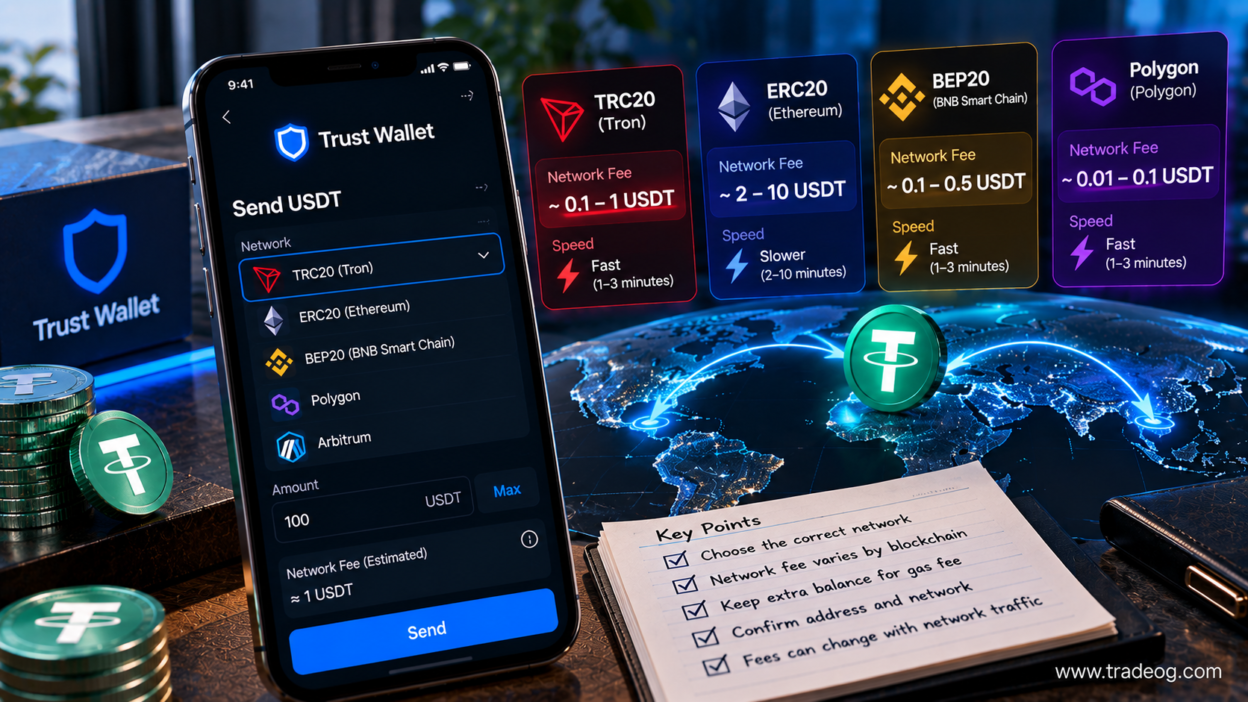
If you are sending USDT from Trust Wallet for the first time, one question usually appears immediately: how much network fee do I need to pay?
The answer is not one fixed USDT amount. The network fee depends on the blockchain carrying your USDT transaction, the current network conditions, the transaction type and the fee estimate shown by your wallet when you are ready to confirm.
This is important because USDT is a token, not the blockchain itself. Tether issues USD₮ across multiple blockchain networks, including Ethereum, Tron and Polygon, among others. Each network has its own transaction-fee mechanism. urlTether’s official blockchain informationhttps://tether.io/news/safeguarding-tether-tokens-a-proactive-approach-to-blockchain-resilience/
So if you have 100 USDT in Trust Wallet, you cannot simply assume that sending it will always cost 1 USDT, 5 USDT or any other fixed amount.
Quick Answer: What Network Fee Is Required?
You need enough network fee for the blockchain on which your USDT is being sent. The exact amount should be checked on the Trust Wallet transaction confirmation screen immediately before you approve the transfer.
For some networks, the fee is normally paid using the network’s native asset. For example:
- Ethereum transactions generally use ETH for gas.
- TRON transactions use the network’s fee/resource system, involving TRX and network resources.
- BNB Smart Chain transactions use BNB for gas.
- Polygon transactions use the applicable native gas token for that network.
- Other supported networks have their own fee mechanisms.
The exact requirement can change from one transaction to another. Trust Wallet also has a newer FlexGas feature that can allow supported users and transactions to pay gas using alternative assets such as TWT, USDT or USDC on supported networks instead of maintaining a separate native-token balance. Availability depends on the transaction and supported network. urlTrust Wallet FlexGas explainedhttps://trustwallet.com/blog/academy/flex-gas-pay-for-gas-with-twt-usdt-or-usdc
Why There Is No Universal USDT Network Fee
Imagine three traders each holding 100 USDT:
- Trader A holds USDT on Ethereum.
- Trader B holds USDT on TRON.
- Trader C holds USDT on Polygon.
All three hold something called USDT, but they are not using the same transport network.
Tether describes blockchains as the transport layer for its tokens and has issued USDT across multiple networks. urlTether’s multi-chain USDT explanationhttps://tether.io/news/safeguarding-tether-tokens-a-proactive-approach-to-blockchain-resilience/
Because the underlying networks operate differently, their transaction costs can also differ significantly.
That is why an article giving one permanent number such as “USDT always costs 1 USDT to send” would be misleading.
How Trust Wallet Shows the Fee
When you initiate a transfer, Trust Wallet calculates or obtains the applicable network-fee estimate for the transaction. You should review the confirmation screen before approving the transfer.
The practical process is:
- Open Trust Wallet.
- Select the specific USDT balance you want to send.
- Tap Send.
- Enter the recipient address.
- Confirm the selected network.
- Enter the amount.
- Review the displayed network fee.
- Check the amount the recipient will receive.
- Confirm only after the address, network and fee all look correct.
Trust Wallet’s USDT information confirms that users can store, send and receive USDT while retaining control of their private keys. urlTrust Wallet USDT wallethttps://trustwallet.com/usdt-wallet
USDT Network Fee vs Trust Wallet Fee
These terms are often confused.
A network fee is the cost associated with getting a transaction processed by the blockchain. It is not simply a fee charged by Trust Wallet for holding USDT.
Trust Wallet’s terms also distinguish blockchain-related and third-party service fees from wallet functionality. Fees associated with DApps, DEXs or third-party services can be determined by those services rather than by Trust Wallet itself. urlTrust Wallet Terms of Servicehttps://trustwallet.com/terms-of-service
For a basic USDT transfer, therefore, you should first identify:
- which network the USDT is on;
- what fee the network currently requires;
- what Trust Wallet displays before confirmation; and
- whether any additional third-party service fee applies.
Ethereum USDT: Why the Fee Can Be Higher
USDT on Ethereum uses Ethereum’s transaction infrastructure. Sending an ERC-20 USDT transaction requires an Ethereum transaction and therefore involves Ethereum gas.
The cost can change with network demand and the complexity of the transaction. A simple transfer may have a different cost from a more complex smart-contract interaction.
This is one reason traders should never rely on an old screenshot showing an Ethereum gas fee from another day.
If Trust Wallet currently shows a particular fee for your transaction, that live estimate is more relevant than a generic historical number.
TRON USDT: Why You May Need TRX or Resources
USDT on TRON is commonly referred to as TRC-20 USDT.
TRON’s fee model differs from Ethereum’s gas model. Resources such as bandwidth and energy can affect the cost of executing transactions, and TRX can be relevant when additional resources are required.
That means a trader should not think:
“I have 100 USDT, so I automatically have everything required to send 100 USDT.”
The wallet needs whatever fee mechanism is applicable to the transaction.
This is also why keeping a small amount of the relevant native asset can be useful when operating a self-custody wallet, unless the specific transaction supports an alternative gas-payment method.
BNB Smart Chain USDT: BNB Can Matter
USDT can also exist on BNB Smart Chain. Transactions on that network use BNB as the native gas asset under the normal fee model.
So a wallet containing USDT but no usable gas balance can encounter an insufficient-fee problem.
Again, the important point is not a fixed dollar figure. The required amount changes with network conditions and the transaction itself.
Polygon and Other Networks
Polygon and other supported chains can also carry USDT. Their fee systems are different from Ethereum and TRON.
Tether’s current materials show that USDT is a multi-chain asset, while supported chains and token implementations can change over time. Tether has also discontinued or changed support for certain legacy blockchain implementations, which is a reminder that traders should check the current supported network rather than relying on an old article or screenshot. urlTether’s current USDT support informationhttps://tether.io/news/tether-provides-update-on-transition-plan-for-legacy-blockchains/
How Much USDT Do You Actually Lose to the Network Fee?
This depends on how the fee is presented and paid.
For example, suppose you want to send 100 USDT.
If the wallet shows:
- Amount: 100 USDT
- Network fee: applicable fee
- Recipient receives: 100 USDT
then the fee may be paid separately using the applicable gas mechanism.
In another transaction, the wallet may structure the fee differently or offer an alternative gas-payment option. Therefore, do not calculate the recipient’s final amount from the USDT balance alone.
Always read the final confirmation screen.
What Happens If You Have No Gas Balance?
One of the most common beginner mistakes is holding USDT but having none of the asset required to pay network fees.
For example, you may have USDT on a network where the normal transaction fee requires the network’s native token. If your wallet has zero usable balance of that token, the transaction may fail to proceed.
That does not necessarily mean your USDT has disappeared.
It usually means you need to satisfy the applicable fee requirement before the blockchain can process the transaction.
Trust Wallet’s FlexGas feature can reduce this friction for supported transactions because it can allow gas to be paid using supported alternative assets, including USDT or USDC in certain circumstances. urlTrust Wallet FlexGashttps://trustwallet.com/blog/academy/flex-gas-pay-for-gas-with-twt-usdt-or-usdc
Why Network Congestion Can Change the Fee
Blockchain transaction costs are not necessarily static.
When demand for block space increases, the cost of getting a transaction processed can change. Trust Wallet’s own educational material explains that blockchain transaction fees can fluctuate with network congestion and market demand. urlTrust Wallet transaction-fee explanationhttps://trustwallet.com/blog/academy/bitcoin-transaction-fees-explained
This is particularly relevant when sending funds during periods of high market activity.
A fee you saw yesterday may not be the fee you see today.
Why You Should Not Choose a Network Just Because It Looks Cheaper
This is critical for USDT transfers.
Suppose your wallet offers multiple versions of USDT. You notice that one network appears cheaper and decide to use it without checking the recipient.
That can create a serious problem.
The receiving wallet or exchange must support the exact token and network combination you are sending. A cheap transfer is not useful if the recipient cannot credit it.
TradeOG’s detailed guide on TRC20 vs ERC20 USDT explains the network-selection issue in more detail.
If you accidentally send USDT using an unsupported network, recovery may be difficult or impossible depending on who controls the receiving address and whether the platform supports recovery.
See What Happens If You Send USDT to the Wrong Network From Trust Wallet? before making a large transfer.
Network Fee vs Exchange Fee vs Withdrawal Fee
Another common mistake is treating every deduction as a blockchain fee.
| Cost | What it relates to |
|---|---|
| Network fee | Blockchain processing of the transaction. |
| Exchange/platform fee | Fee charged by a trading or conversion platform. |
| Withdrawal fee | A provider’s charge for withdrawing an asset or fiat. |
| Spread | Difference between quoted buy/sell prices. |
| Gas fee | Common term for blockchain execution cost on smart-contract networks. |
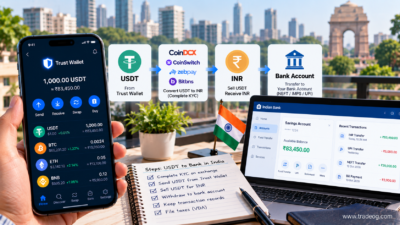
A trader moving USDT from Trust Wallet to an INR platform could therefore encounter more than one cost during the complete process.
The blockchain fee is only one component.
Example: Sending a USDT Trading Payout
Imagine you receive 1,000 USDT from a trading-related payout into Trust Wallet.
You want to move it to a platform that supports the exact USDT network for conversion into INR.
Before pressing Send, check:
- Is this definitely the USDT token you intend to send?
- Which blockchain is it on?
- Does the destination platform support that exact network?
- Is the deposit address correct?
- Does Trust Wallet show a network fee?
- Do you have the required gas asset or supported alternative payment method?
- How much will the recipient actually receive?
- Are there any platform withdrawal or deposit charges?
Only after checking these details should you confirm the transfer.
Should You Keep Extra Crypto for Network Fees?
For self-custody wallets, keeping an appropriate amount of the relevant fee asset can be practical.
How much is appropriate depends on:
- the network you use;
- how frequently you transact;
- the current network conditions;
- the type of transactions you make; and
- whether alternative gas payment is available.
There is no universal “correct” reserve that applies to every Trust Wallet user.
Avoid unnecessarily keeping a large amount solely for gas. Instead, monitor the actual fee shown for your normal transactions and maintain a reasonable operational buffer.
Can Trust Wallet Pay USDT Network Fees With USDT?
Sometimes, on supported transactions.
Trust Wallet’s FlexGas system allows supported users to pay gas using assets such as TWT, USDT and USDC for certain supported sending and swapping transactions. The feature uses supported smart-account functionality and is not a universal replacement for every blockchain’s normal gas requirement. urlTrust Wallet FlexGas documentationhttps://trustwallet.com/blog/academy/flex-gas-pay-for-gas-with-twt-usdt-or-usdc
Therefore, if the option appears on your transaction screen, review it carefully. If it does not appear, follow the normal gas requirement for that network.
What If Trust Wallet Shows a Very High Fee?
Do not approve the transaction automatically.
First check:
- the selected network;
- the amount being sent;
- the current network conditions;
- whether the transaction is a simple transfer or another operation;
- whether a supported alternative gas-payment method is available; and
- whether the destination actually requires that network.
If the fee looks unexpectedly high, waiting for network conditions to change may be reasonable for a non-urgent transfer. Never switch networks solely because the fee looks lower without confirming compatibility with the recipient.
Important: Never Confuse Network Fee With the Amount Received
Suppose you are sending a trading payout to an exchange or another wallet.
The amount you receive can differ from the amount you send because of fee structures at different stages. A blockchain fee, provider fee, conversion spread or withdrawal charge can all affect the final value.
This is especially important when converting USDT into INR. See TradeOG’s Trust Wallet to INR guide for the next stage of the process.
Trust Wallet USDT Fee Checklist
- Identify the exact USDT network.
- Confirm the recipient supports that network.
- Check the live network-fee estimate in Trust Wallet.
- Check whether native gas is required.
- Check whether FlexGas is available for your transaction.
- Verify the recipient address.
- Review the final amount the recipient will receive.
- Do not rely on old fee screenshots.
- For a large transfer, consider a small test transaction first.
- Keep the transaction hash after sending.
Frequently Asked Questions
What is the network fee for sending USDT from Trust Wallet?
There is no single fixed fee. It depends on the blockchain carrying the USDT transaction and current network conditions. Trust Wallet displays the applicable fee before you confirm the transaction.
Do I need ETH to send USDT?
If your USDT is on Ethereum and the normal transaction uses Ethereum gas, ETH is generally the native gas asset. However, supported Trust Wallet transactions may offer alternative gas payment through FlexGas.
Do I need TRX to send TRC20 USDT?
TRON uses a resource and fee model involving TRX. Depending on your available resources and the transaction, TRX may be required. Check the actual fee requirement shown by your wallet.
Why does my USDT transfer say insufficient network fee?
Usually, the wallet does not have enough of the required fee asset or applicable resources to process the transaction. Check the network and the fee requirement before trying again.
Is TRC20 USDT always cheaper than ERC20 USDT?
No fixed rule should be treated as permanent. Network conditions change, and the actual fee depends on the blockchain and transaction. Compare the live fee shown for the specific transfer rather than relying on a generic ranking.
Can I send USDT on any network I want?
No. You must use a network supported by the receiving wallet or platform for that exact USDT deposit. Sending through an unsupported network can create recovery problems.
Does Trust Wallet charge a fee just for holding USDT?
No blockchain network fee is incurred merely because USDT sits in your wallet. A network transaction fee becomes relevant when you perform an on-chain transaction such as sending or interacting with a smart contract.
Final Takeaway
The most accurate answer to “What network fee is required to send USDT from Trust Wallet?” is: the fee required by the blockchain carrying your USDT transaction at that moment.
There is no universal USDT transfer fee. Ethereum, TRON, BNB Smart Chain, Polygon and other networks have different fee mechanisms and conditions. Trust Wallet shows the applicable transaction cost before confirmation, and supported transactions may also offer alternative gas-payment options through FlexGas.
For traders, the most important rule is simple: choose the correct network first, then check the live fee. Never choose a blockchain solely because someone says it is cheaper.
If this transfer is part of a trading or prop-firm payout, also keep the transaction hash and payout records. That makes it easier to trace the payment from the original payout through the wallet and into the receiving platform.
Disclaimer
Disclaimer: TradeOG provides educational and informational content only. Nothing in this article should be treated as financial, investment, legal, tax, banking, regulatory or professional advice. Network fees, wallet features, supported blockchains, provider availability and transaction costs can change. Always verify the live fee shown in your wallet and confirm the recipient network before sending USDT. For Indian traders, also verify applicable tax, banking, RBI/FEMA and provider requirements for your specific circumstances.