
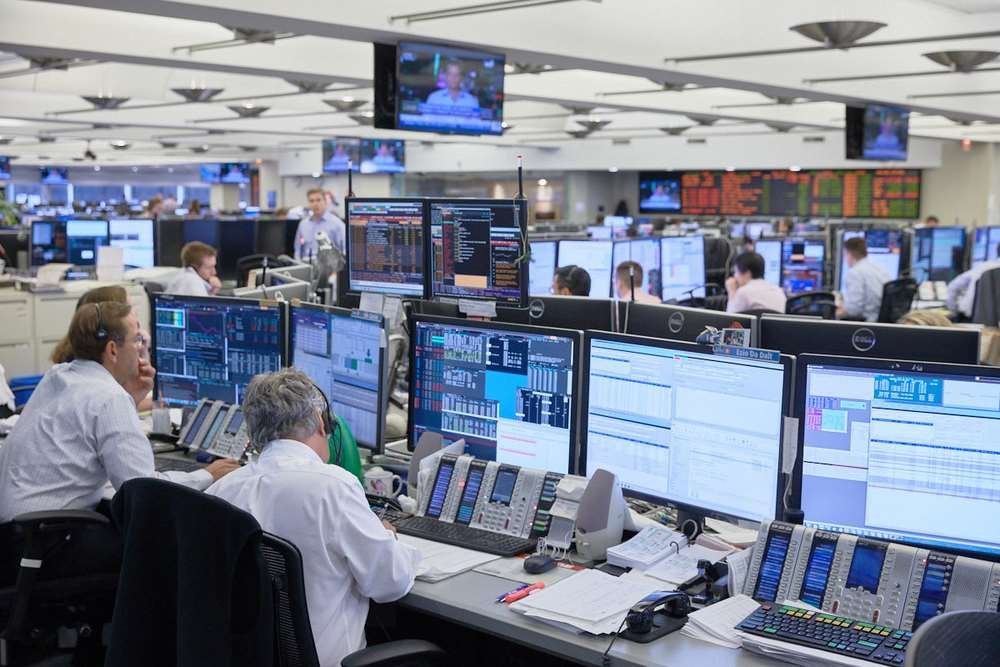
Forex is often described as the world’s most liquid financial market, but liquidity is not a permanent pool of orders sitting at every price. It is supplied by a network of banks, non-bank market makers, electronic venues, brokers and other participants that continuously decide how much risk they are willing to warehouse.
When major banks reduce their market activity, the important change is not simply that fewer trades are happening. The structure of available liquidity can change. Quotes may become less competitive, market depth can become thinner, spreads can widen, large orders can have a greater price impact and short-term volatility can become more pronounced.
The effect is especially important around session transitions, holidays, major economic releases, geopolitical shocks and periods when banks deliberately reduce risk. Modern FX markets also have substantial non-bank liquidity provision, so a reduction in bank activity does not automatically mean that liquidity disappears. Instead, liquidity can become more fragmented and more sensitive to order flow.
What Does It Mean When Major Banks Reduce Market Activity?
A major FX bank can reduce activity in several ways:
- Quote smaller sizes at each price level.
- Widen bid-ask spreads.
- Reduce the number of currency pairs or clients it actively prices.
- Hedge less aggressively through inter-dealer venues.
- Reduce balance-sheet risk or inventory exposure.
- Increase internalisation of client flow rather than sending every trade into the wider market.
- Temporarily withdraw from particularly risky or volatile conditions.
That distinction matters. A bank can remain active while providing less immediately executable liquidity. A market can therefore still have substantial trading volume while becoming more expensive or fragile to trade.
Why Banks Matter to Forex Liquidity
Spot FX is an over-the-counter market rather than a single centralised exchange. Dealers connect clients to liquidity pools, electronic venues and other dealers. The Bank for International Settlements describes the FX market as decentralised and fragmented, with dealers acting as intermediaries between customers and liquidity sources.
In its analysis of the 2025 BIS Triennial Survey, the BIS notes that dealers internally matched more than 80% of customer trades within their own liquidity pools. This means a significant amount of FX liquidity is created through dealer-client relationships and internalisation rather than appearing as visible orders on a public central order book.
That is one reason why a reduction in dealer activity can matter even when a retail trader cannot see a traditional order book changing.
What Happens to Market Depth?
Market depth describes how much buying and selling interest is available around the current market price. In practical trading terms, deeper liquidity means larger orders can often be executed with less price impact.
When banks reduce the amount of risk they are willing to warehouse, they may quote smaller amounts or pull some quotes farther away from the current mid-price.
Imagine EUR/USD has several layers of institutional liquidity around the current price. Under normal conditions, a large order may be absorbed across several price levels with only a small movement in the market.
Now imagine several large liquidity providers reduce their quoted size at the same time. The visible and executable liquidity near the current price becomes thinner. The same order can then consume more levels and move the market further.
This is why a relatively ordinary order can sometimes produce an unexpectedly large short-term move during a thin-liquidity period.
Spreads Can Widen
The most obvious effect for traders is often the bid-ask spread.
A liquidity provider is taking risk when it quotes a two-way price. If the provider expects greater uncertainty about the next price movement, it can compensate by quoting a wider spread or reducing the amount it is willing to trade.
For a trader, that can mean:
- Higher entry cost.
- Higher exit cost.
- More floating loss immediately after entry.
- Stop-loss levels being reached more easily during temporary spread expansion.
- Scalping strategies becoming less attractive.
This is particularly relevant for short-term strategies because a small spread change can consume a large portion of the expected trade edge.
Why Price Can Move Faster in Thin Liquidity
Thin liquidity does not necessarily create a trend. It changes how much order flow is required to move the price.
Suppose there are large quantities of resting liquidity close to the current price. A buyer entering the market can be absorbed without moving the price very far.
If those liquidity layers are reduced, the same buyer may have to trade through several price levels before finding enough sellers.
The result can be a faster price movement:
Less nearby liquidity → greater order impact → faster price movement.
This is one reason why traders can see sharp candles without a proportionate increase in the fundamental importance of the underlying information.
Volatility and Liquidity Are Not the Same Thing
A common mistake is to assume that high volatility means high liquidity because many trades are taking place.
They are different concepts.
Volatility describes how rapidly or significantly price changes.
Liquidity describes how easily transactions can be executed without causing substantial price impact.
A market can have high trading activity but poor liquidity if market makers are reducing the amount of risk they are willing to absorb.
In fact, volatile markets can cause liquidity providers to become more defensive. The result can be a feedback loop:
Higher uncertainty → less aggressive liquidity provision → thinner market → greater price impact → larger short-term moves.
What Happens During Major News?
Major economic releases can create a temporary mismatch between information demand and liquidity supply.
Before a major event, liquidity providers may reduce quoted size because the probability of a rapid repricing is higher. Immediately after the release, traders can send large orders while some liquidity providers are still adjusting their prices.
The result can be:
- Spread expansion.
- Rapid repricing.
- Slippage.
- Price gaps between executable quotes.
- Temporary liquidity holes.
This does not mean every news candle is caused by banks withdrawing liquidity. New information itself can create aggressive order flow. The important point is that reduced liquidity can amplify the price impact of that order flow.
London and New York Session Changes
FX liquidity changes as major financial centres open and close.
During periods when London and New York are both active, multiple groups of institutional participants are operating simultaneously. When one major centre winds down, some sources of liquidity disappear or become less active.
For traders, this can change:
- Spread conditions.
- Execution speed.
- Market depth.
- Breakout follow-through.
- Short-term volatility.
However, session timing should not be treated as a mechanical signal. A quiet session can still produce a large move if an unexpected order imbalance or news event enters the market.
What Happens When Banks Internalise More Orders?
Internalisation means a dealer can match customer flows within its own liquidity pool rather than immediately sending every transaction into the external inter-dealer market.
This can be efficient. If one client wants to buy and another wants to sell, the dealer may be able to offset the flows internally.
For customers, internalisation can support competitive pricing during stable conditions. But it also means that not all liquidity is visible in a public market-depth display.
Therefore, a retail trader looking at a broker’s market-depth tool should not assume it represents the complete global FX liquidity pool.
Non-Bank Liquidity Providers Can Absorb Some of the Difference
Modern FX liquidity is not supplied exclusively by traditional banks. Principal trading firms and other electronic market makers have become important liquidity providers.
The BIS has documented this structural shift for years. Its research describes a market where some non-bank firms use technology and automated strategies to provide liquidity alongside dealer banks.
This means a reduction in major-bank activity does not automatically produce an identical reduction in global liquidity.
Instead, the market can experience a redistribution of liquidity:
- Bank liquidity decreases.
- Non-bank liquidity becomes relatively more important.
- Liquidity becomes more fragmented across venues.
- Pricing differences between venues can become more relevant.
- Execution quality can depend more heavily on the broker’s liquidity relationships.
Why Broker Prices Can Behave Differently
Retail traders sometimes notice that two brokers show slightly different spreads, highs, lows or short-term candles.
One reason is that brokers can connect to different liquidity providers, aggregators and execution venues.
If one liquidity source reduces its quote size or widens its spread, the effect on a broker depends on how that broker aggregates and prioritises other price streams.
That does not necessarily mean one broker is manipulating the market. Different liquidity sources can legitimately produce different executable prices, especially during fast markets.
For a deeper explanation, see How Liquidity Providers Affect Forex Prices and What Is Forex Market Depth and Does It Matter?.
How Reduced Bank Activity Can Affect Slippage
Slippage occurs when an order executes at a different price from the one expected or requested.
Thin liquidity can increase the probability or size of slippage because there may be insufficient executable liquidity at the desired price.
For example, assume a trader sends a market order expecting EUR/USD at 1.1000. If enough liquidity exists at 1.1000, the order can be filled close to that level.
If the nearby liquidity has been reduced, the order may consume quotes at 1.1000, 1.1001, 1.1002 and beyond before the full quantity is executed.
The final average price can therefore differ from the trader’s initial expectation.
Why Stop Losses Can Be Affected
A stop loss does not guarantee that the exact displayed chart price will be the execution price.
During thin liquidity, spreads can widen and available quotes can change rapidly. A stop order may therefore trigger when the executable bid or ask reaches the relevant level, while the candle on another platform appears slightly different.
This is particularly important for highly leveraged short-term trading and prop-firm accounts where a small execution difference can materially affect drawdown.
TradeOG also covers this issue in Why XAU/USD Can Hit Your Stop Loss Without Breaking the Candle Low.
How Indian Traders Can Detect Thinner Liquidity
You cannot see the entire global FX liquidity pool from a retail trading platform, but you can monitor several practical signals.
- Bid-ask spread becomes wider than its normal range.
- Execution becomes noticeably slower.
- Slippage becomes more frequent.
- Price jumps between consecutive quotes.
- Breakouts travel farther with relatively little visible volume information.
- Different brokers show larger short-term price differences.
- Market depth, where available, becomes noticeably thinner.
Do not rely on one signal. A wider spread can be caused by a broker-specific change, a news event, a session transition or broader market conditions.
What Should Scalpers Do?
Scalpers are particularly exposed because their expected profit per trade is small relative to transaction costs.
When liquidity deteriorates, consider:
- Reducing position size.
- Avoiding entries when spreads are abnormal.
- Allowing for realistic slippage in backtesting.
- Avoiding market orders during sudden liquidity gaps.
- Checking execution statistics instead of judging a setup only from the chart.
A strategy that performs well under normal spreads can become unprofitable when execution costs increase.
What Should Swing Traders Watch?
Swing traders are generally less sensitive to a temporary one-pip spread change than scalpers, but thin liquidity can still matter around entry and exit points.
Pay attention to:
- Major session transitions.
- Weekend reopenings.
- Public holidays.
- Central-bank announcements.
- Major inflation and employment releases.
- Geopolitical shocks.
- Periods when several major markets are closed simultaneously.
The objective is not to predict exactly when banks will reduce activity. It is to recognise when execution conditions are different from the conditions under which the strategy was tested.
Does Lower Bank Activity Always Mean a Forex Crash?
No.
Reduced bank activity can make liquidity thinner, but it does not tell you whether price will rise or fall.
Liquidity is an execution and market-structure variable, not a directional indicator.
A thin market can move sharply upward, sharply downward or remain range-bound. The direction depends on order flow, information, positioning, hedging needs and expectations.
Example: A Thin-Liquidity EUR/USD Move
Consider a hypothetical EUR/USD market trading around 1.1000.
Under normal conditions, several liquidity providers quote meaningful size around 1.1000. A large buy order can be absorbed with limited price impact.
Later, several major dealers reduce their quoted size because of elevated event risk. A large buy order arrives.
Instead of being absorbed near 1.1000, the order consumes available liquidity at multiple levels. EUR/USD quickly trades through 1.1002, 1.1004 and 1.1006.
The move does not necessarily mean that fundamental fair value suddenly changed by six pips. Part of the movement can simply reflect the reduced amount of liquidity available to absorb the order.
Liquidity Can Recover Quickly
Thin liquidity is not always permanent.
When uncertainty declines and major participants return to normal quoting behaviour, spreads can tighten and market depth can improve.
This is why a chart can show an unusually large candle followed by relatively calm trading. The first move occurred when liquidity was thin or order flow was highly imbalanced; subsequent trading occurred after liquidity conditions normalised.
Major Bank Activity vs Forex Liquidity: The Key Relationship
| Bank Activity | Likely Liquidity Effect | Potential Trader Impact |
|---|---|---|
| High and competitive | Deeper quotes | Tighter execution |
| Reduced quote size | Thinner depth | Greater market impact |
| Wider bank spreads | Higher transaction cost | Higher entry/exit cost |
| Risk reduction | Less nearby liquidity | More slippage risk |
| More internalisation | Less visible external liquidity | Market depth becomes less representative |
| Non-bank liquidity increases | Partial replacement | Liquidity becomes more fragmented |
How This Connects to Forex Market Structure
The modern FX market is more technologically sophisticated than the traditional idea of a simple interbank market. Bank dealers, principal trading firms, electronic communication networks, liquidity aggregators and brokers all contribute to execution.
The BIS has documented the increasing role of electronic and non-bank intermediation, while its research on constrained liquidity provision shows that when dealer intermediation capacity becomes constrained, liquidity costs can rise disproportionately relative to trading volume.
That is the key lesson: trading volume alone does not tell you how easy it is to trade.
Practical Checklist Before Trading in Thin Liquidity
- Compare the current spread with its normal range.
- Check whether a major economic event is approaching.
- Know which global sessions are active.
- Check whether a major market is closed for a holiday.
- Reduce position size if execution conditions deteriorate.
- Avoid assuming a displayed retail order book represents global FX liquidity.
- Review actual slippage from previous trades.
- Use realistic spread and slippage assumptions in backtesting.
- Be cautious with market orders during sudden price movements.
- Do not interpret low liquidity as a buy or sell signal by itself.
FAQs
Do major banks control all Forex liquidity?
No. Major dealer banks remain important, but modern FX liquidity also comes from non-bank market makers, principal trading firms, electronic venues and other intermediaries.
Does lower bank activity always mean wider spreads?
Not always. Other liquidity providers can offset some of the reduction. However, if aggregate risk-taking capacity falls, spreads and execution costs can increase.
Can low liquidity cause a sudden Forex spike?
Yes. If available liquidity near the current price is thin, a relatively large order or sudden information shock can move price through several levels quickly.
Is high Forex volume the same as high liquidity?
No. Volume measures trading activity, while liquidity concerns the ability to transact with limited price impact. A market can remain active while liquidity becomes more expensive or fragile.
Does reduced bank activity predict the direction of Forex?
No. It is a market-structure and execution condition, not a directional trading signal.
Final Takeaway
When major banks reduce market activity, Forex liquidity can become thinner, more fragmented and more sensitive to order flow. The most visible consequences can include wider spreads, lower market depth, greater price impact and increased slippage.
But the modern FX market has multiple layers of liquidity. Non-bank market makers and electronic venues can absorb part of the reduction, meaning the effect is rarely as simple as “banks leave and liquidity disappears.”
For traders, the practical lesson is straightforward: when liquidity conditions change, execution assumptions should change too. Watch spreads, market depth, slippage and session conditions rather than assuming that a liquid currency pair will always behave the same way.
Related TradeOG Guides
- How Liquidity Providers Affect Forex Prices
- What Is Forex Market Depth and Does It Matter?
- What Happens When Liquidity Disappears From the Forex Market
- How XAU/USD Liquidity Changes During the London-New York Overlap
- Why Forex Quotes Can Become Less Accurate During Extreme Volatility
- Forex Market Depth Explained
Disclaimer: TradeOG provides educational and informational content only. Nothing in this article should be treated as financial, investment, legal, tax, banking or professional advice. Forex liquidity, spreads, execution quality and market conditions can change rapidly. Always consider your broker’s execution model, liquidity sources, trading costs and risk controls before making trading decisions.